
The Gap Between Your Shelf and Your Stream
Role
Solo Product Designer
Type
Feature concept
Tools
Figma · Protopie · Discogs API · Spotify API
Year
2026
Timeline
2 week sprint
Overview
Vinyl sales hit $1 billion in the US in 2025. Most vinyl buyers also use Spotify every day, but nothing connects the two.
Vinyl Mode is a Spotify feature concept that bridges the gap. Scan a record, build your crate, and unlock a deeper listening experience tied to the physical object: pressing details, listening stats, community, and a vinyl-specific Wrapped.
Problem
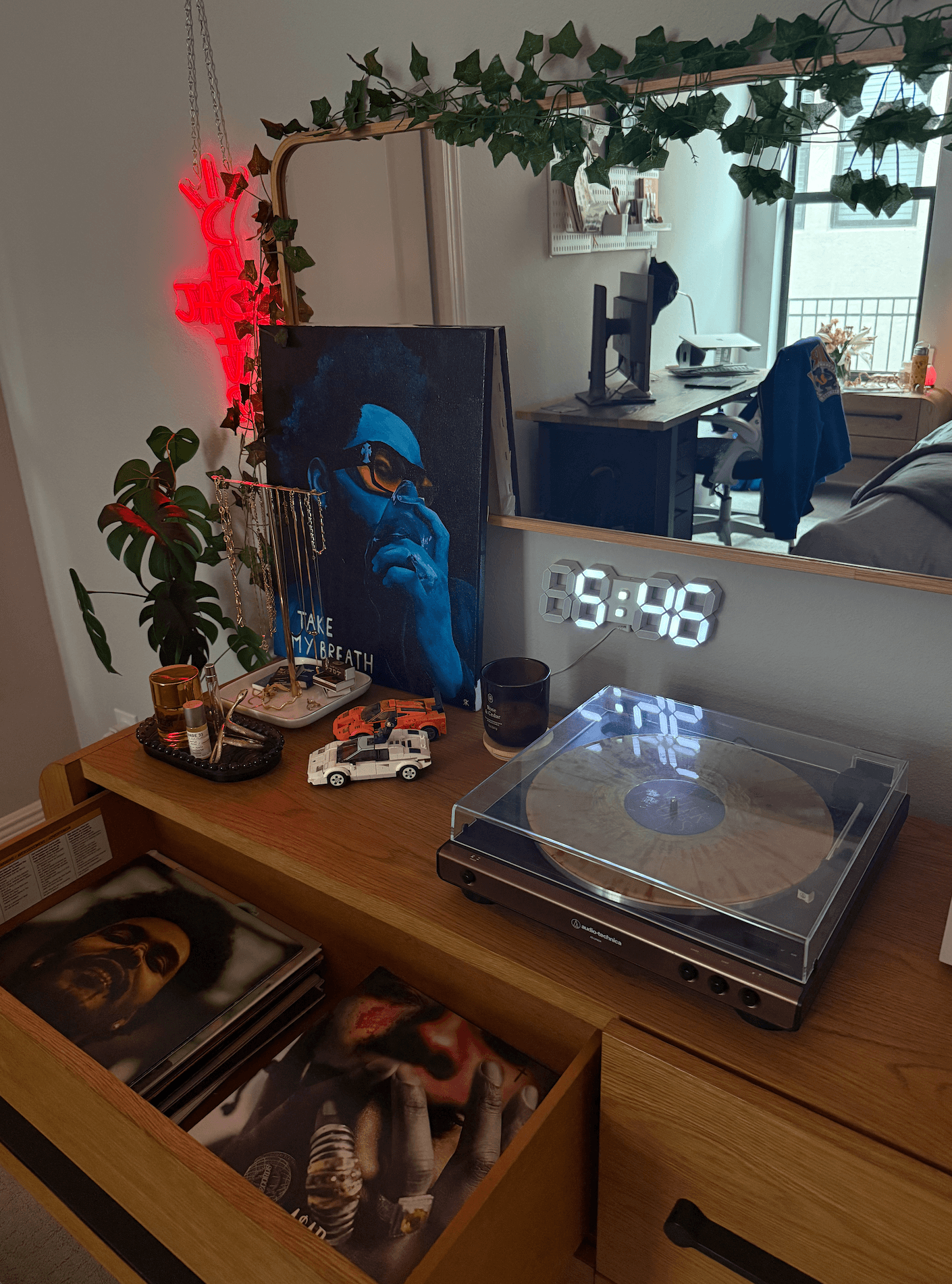
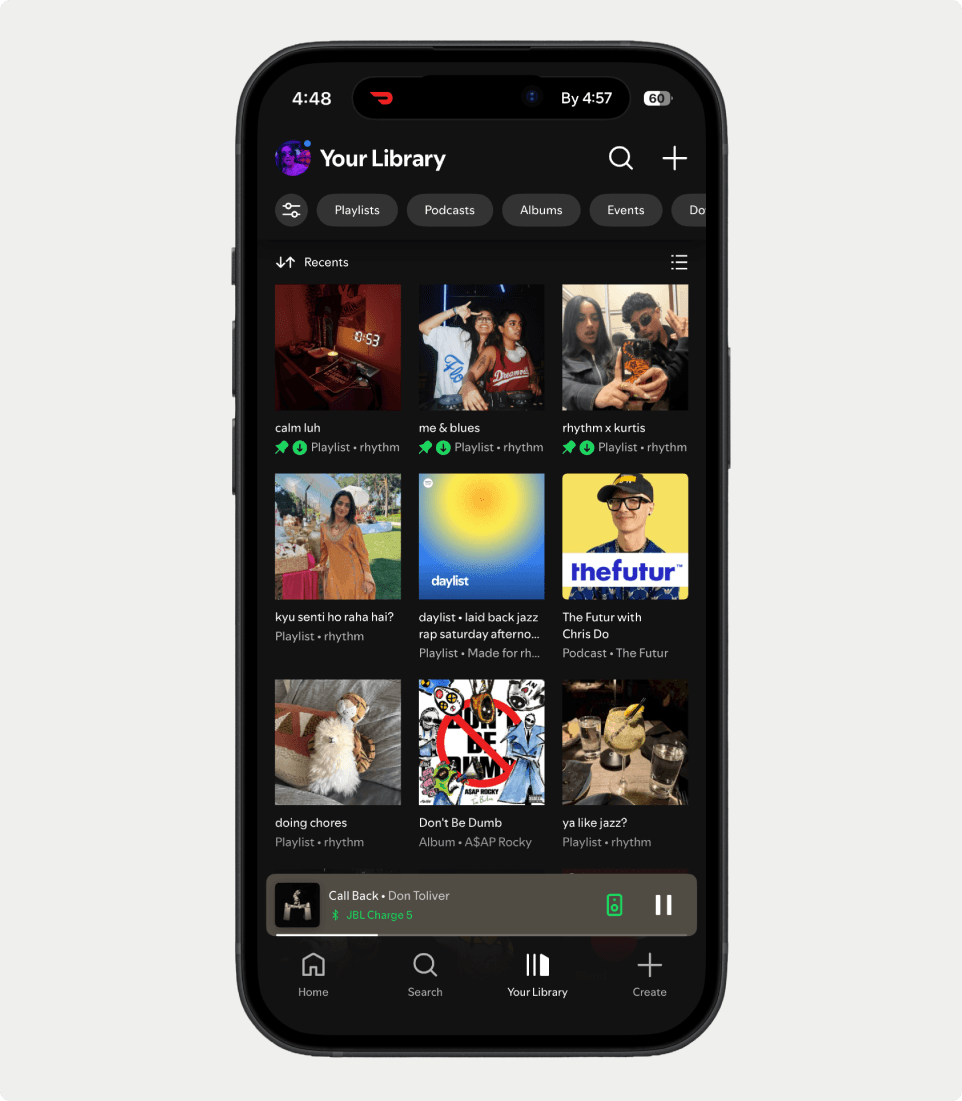
Physical and digital music live in completely separate worlds.
You can own 200 records and Spotify treats you the same as someone who has never bought one. Your collection exists nowhere in your listening experience.
That gap hasn't been designed for yet. Vinyl Mode is an attempt to close it.
Design Challenges
Research
Why Now
Vinyl is the fastest growing physical music format in the world. The buyers are younger than most people expect.
The Numbers
- $1B+ in US vinyl revenue in 2025, 19th consecutive year of growth
- 46.8M units sold in 2025
- Gen Z is the largest vinyl-buying demographic at 27%
- 50% of buyers don't own a turntable — they buy for identity and culture
The Behavior
- Average collector spends $37 per record
- Most use Discogs to catalogue and Spotify to listen
- They're the same people, using two separate tools with no connection between them
How might we
How might we help vinyl collectors bring their physical collection into their digital listening life?
Solution
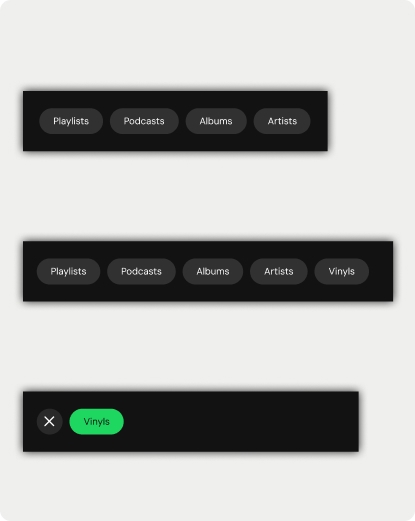
The Solution
Design Decisions
Why the Record Scratch
When you play a record from your crate, there's a short vinyl crackle before the track starts. It's a small detail that marks the moment as different from just hitting play on a playlist. Opt-in, can be turned off in settings.
Turn up your volume to hear it!
The Feeling of Exclusivity
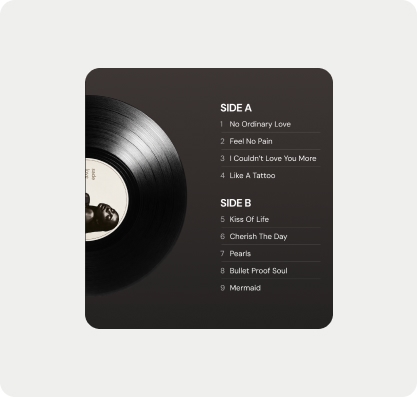
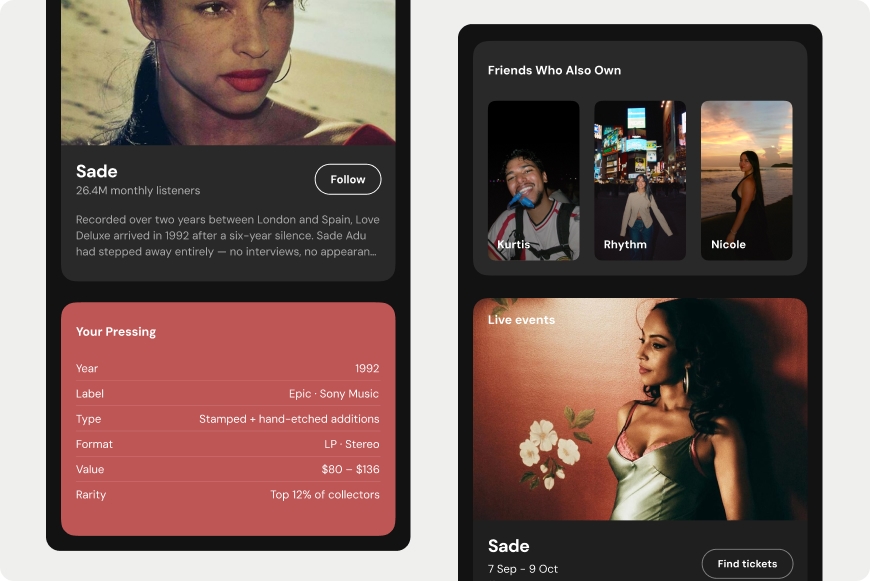
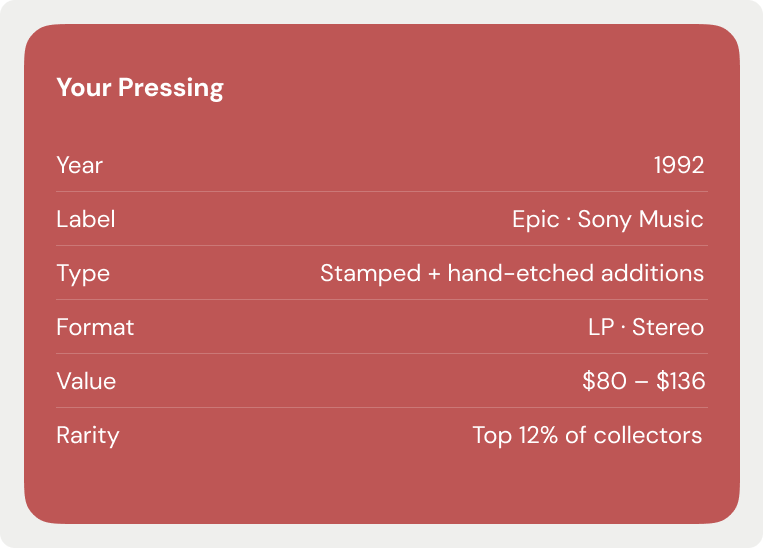
Some pressings have content the streaming version doesn't. Extended cuts, different mixes, bonus tracks. Most people don't know because most people don't own the record. The pressing note in the Deep Dive surfaces exactly what's different about your copy. Not the album in general, your specific pressing.
The Deep Dive
When you scan a record into your crate, you unlock content tied to that specific pressing: recording notes, pressing details, who else in your network owns it, and nearby shows. You get this because you own the physical object, not because you've streamed it a lot. That's the distinction that makes it feel like it means something.
* Spotify just announced Reserved, a feature that identifies superfans based on streaming activity to reserve concert tickets for them. Owning a record is one of the strongest signals of genuine fandom that exists. Vinyl Mode data could feed directly into that superfan score: your crate, your play history from owned records, your pressing rarity. The person who bought the vinyl should be first in line.
How It Was Built
This started as a question: what would it actually take to build this, not just design it?
Frontend
React + Vite
Image Recognition
Google Vision API
Pressing Data
Discogs API
Auth + Playback
Spotify Web API
Deployment
Vercel
It worked.
The gap between physical and digital music isn't just a design problem. Google already knows what your record looks like. Discogs already has every pressing ever made. Spotify already has your listening history. Vinyl Mode is what happens when those three things talk to each other.
Usability Testing
Usability Testing
I walked DJs and vinyl collectors through the key screens. The most consistent feedback had nothing to do with the scanner or the crate. Every DJ wanted it in their Wrapped.
They wanted their collection in their year-end recap. It fits naturally with the rest of Vinyl Mode: owning a record gives you access to something other listeners don't see.
So I took a shot at designing some Vinyl Wrapped slides myself.
Reflection
Reflection
Designing within an existing system is its own skill.
Working inside Spotify's design language forced me to think within constraints I didn't set. Every decision had to coexist with something already built. It's easy to make things look good when you control everything. It's harder when you have to fit in.
Building made me a better designer.
Shipping the prototype taught me things Figma never could. OAuth flows, API integrations, redirect URIs. Working through all of it gave me a real understanding of how products are built. I now design with that context. I know what's easy to build, what's expensive, and what to push back on.
The idea is bigger than this project.
If I were to take this further, I'd want to do more structured research with actual collectors. Vinyl is growing, the APIs exist, and the data is there. Someone is going to build this. I just wanted to see if I could figure out how.